- Fixed written quote after a free survey
- Open 24 hours, every day
- Homes and businesses across London
- Fully insured
- Technicians qualified to RSPH (BPCA) Level 2
- DBS checked technicians
- A minimum 3 month guarantee on pest control services
- NPTA member
- SafeContractor approved
Woodworm
Woodworm or wood boring beetles have been around for centuries and can cause damage to your home or business property if left untreated.
The female of the wood boring insect will lay her eggs in moist and nutritious timber, preferably the sapwood of freshly felled trees or branches outside. The larvae will burrow beneath the surface for three to five years, pupate and then emerge as adults. It’s these larvae which can cause untold destruction to your premises.
Tell-tale signs of woodworm include:
Small round holes in woodwork, similar size to the holes in a dart board.
Fine and powdery dust around these holes (this is known as frass).
Crumbly edges to boards and joists.
Adult beetles emerging from the holes or, present around the house.
Types UK wood boring Beetles (Woodworm)
Furniture Beetle, a very common species of woodworm found in the UK and feeds on both hardwoods and softwoods.
Deathwatch Beetle, the deathwatch beetle found usually in damp timbers makes a ticking mating call. A century ago people in old Victorian hospitals believed this ticking noise was death coming to take a life, hence where it got it’s name.
Powderpost Beetle, this species is very destructive and feeds on hardwood timber.
Longhorn Beetle, this species prefers softwoods such as roof timbers. In warmer weather this beetle can fly which allows an infestation to spread to surrounding neighbours
 Everything you need to know about woodworm
PLACES OF OPERATION
North West London, West London, SW London, SE London and Kent
How we treat woodworm
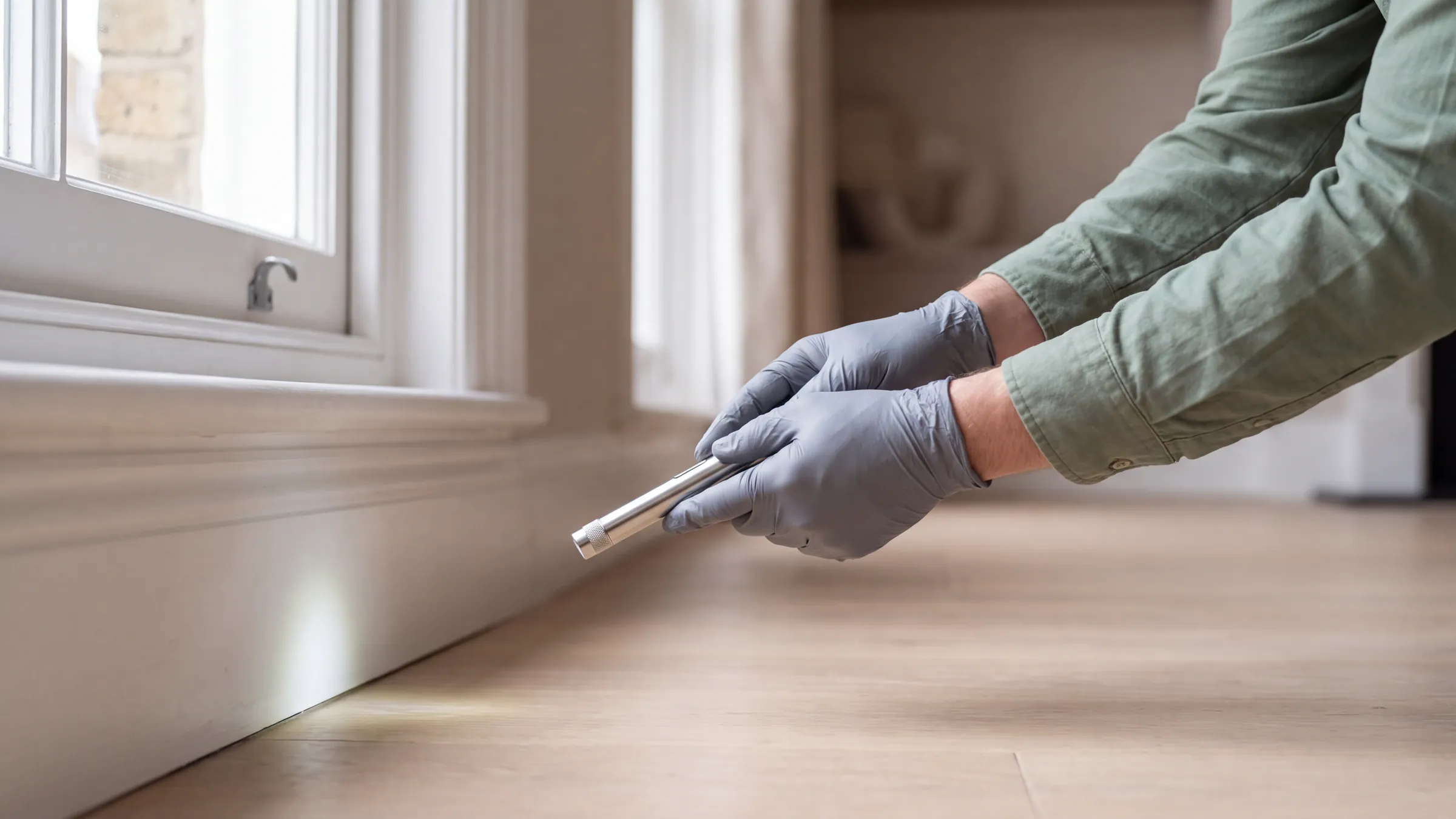
The damage is done by the larvae, which tunnel through the timber for between two and five years before pupating and chewing their way out as adult beetles. So the survey matters: we confirm whether the infestation is live, identify the beetle, whether common furniture beetle, deathwatch, powderpost or house longhorn, and check the extent of the damage to joists, boards and roof timbers. The treatment is then tailored to the timbers affected. Damp timber is a factor for several species, so we also look for its cause.
What's included
Survey: live activity, beetle species and the extent of the damage.
Treatment: tailored to the affected timbers.
Advice: damp, and checking second hand furniture before it comes into the house.
Our guarantee
Our woodworm treatments come with a minimum three month guarantee.
Costs
Every job is priced after a free survey, and you get a fixed written quote before any work starts.
Related advice
How it works
The same three steps for every job, whatever the pest.
Tell us what you have seen
Call, or send the form with your postcode and a line about the problem.
Survey and a fixed quote
We find the cause and the way in. Fixed written quote after a free survey.
Treatment and prevention
We treat, then show you how to stop it coming back.
Questions people ask
How do I know if woodworm is still active?
What does woodworm treatment involve?
Which woodworm beetles are found in the UK?
How does woodworm get into a house?
Other pests we deal with
Get a quote
Send a few details and we will come back to you. Or call, if it is easier to talk it through.
- 020 8914 8285
One number for everything.
Open 24 hours. Call, chat or WhatsApp any time.
Fixed written quote after a free survey.
- Message us on WhatsApp